
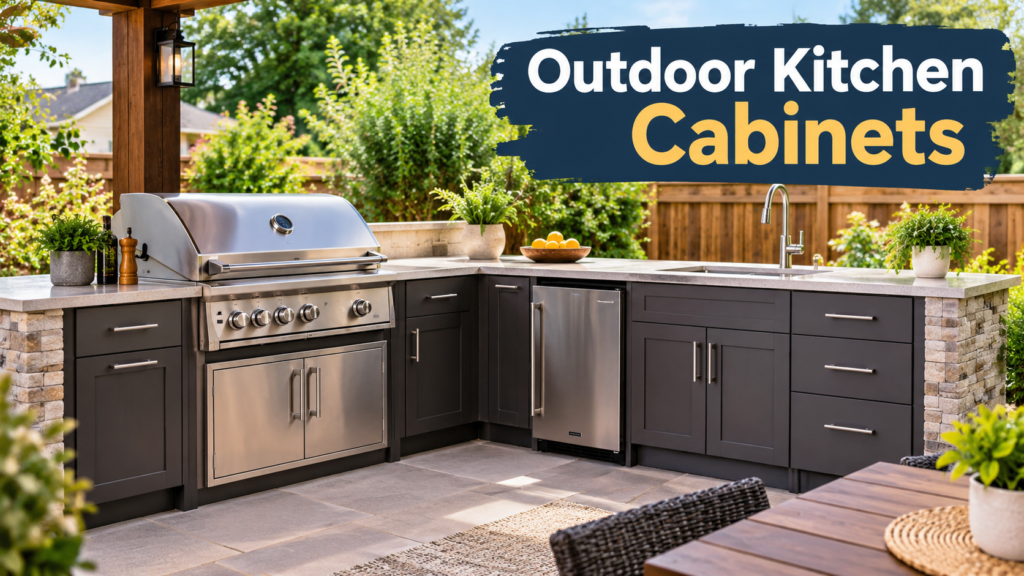

Outdoor kitchen cabinets are weatherproof storage units built specifically to withstand rain, humidity, UV exposure, and temperature swings that would quickly ruin standard indoor cabinetry. Unlike kitchen cabinets built for climate-controlled interiors, outdoor kitchen cabinets must resist rust, warping, mold, and fading while still providing the storage and workspace a functional outdoor cooking area needs. Choosing the right material and construction depends heavily on local climate, budget, and how permanent the installation will be.
What Exactly Are Outdoor Kitchen Cabinets?
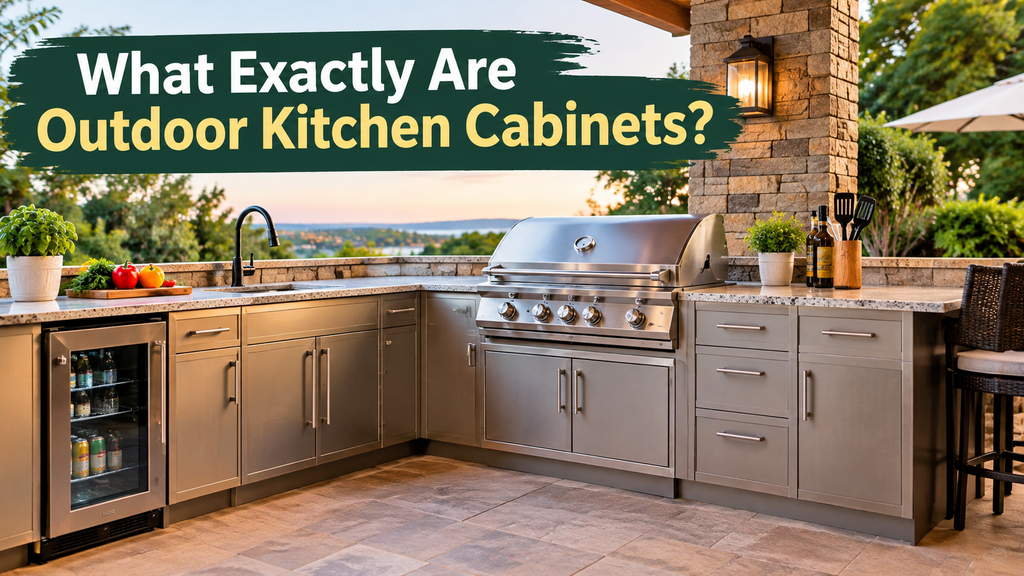
Outdoor kitchen cabinets are the enclosed storage units and structural base of an outdoor cooking space, often also referred to as “modules” when sold as prefabricated components. They typically house grills, drawers, and prep space, forming the structural backbone that countertops and appliances sit on top of. Unlike a standard indoor kitchen, where cabinetry primarily needs to look good and hold weight, outdoor cabinets have to survive direct exposure to sun, rain, humidity, and in many climates, freezing winters, which makes material selection the single most important decision in the design process.
What Is the Best Material for Outdoor Kitchen Cabinets?
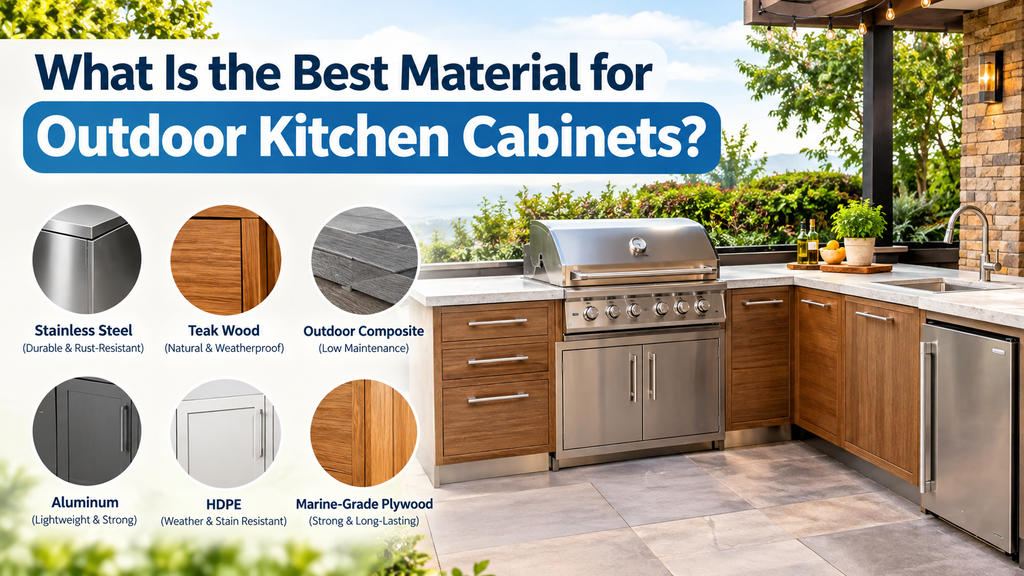
The best material for outdoor kitchen cabinets depends on climate exposure and budget, with marine-grade 304 stainless steel generally considered the top choice for long-term durability. Stainless steel resists rust, holds up to direct sun and rain, and gives outdoor kitchens a clean, professional look that many homeowners associate with high-end builds. Among stainless steel grades, 304 stainless steel is widely regarded as the superior option for outdoor cabinets specifically because of its higher resistance to corrosion compared to lower-grade alternatives.
How Does Powder-Coated Aluminum Compare to Stainless Steel?
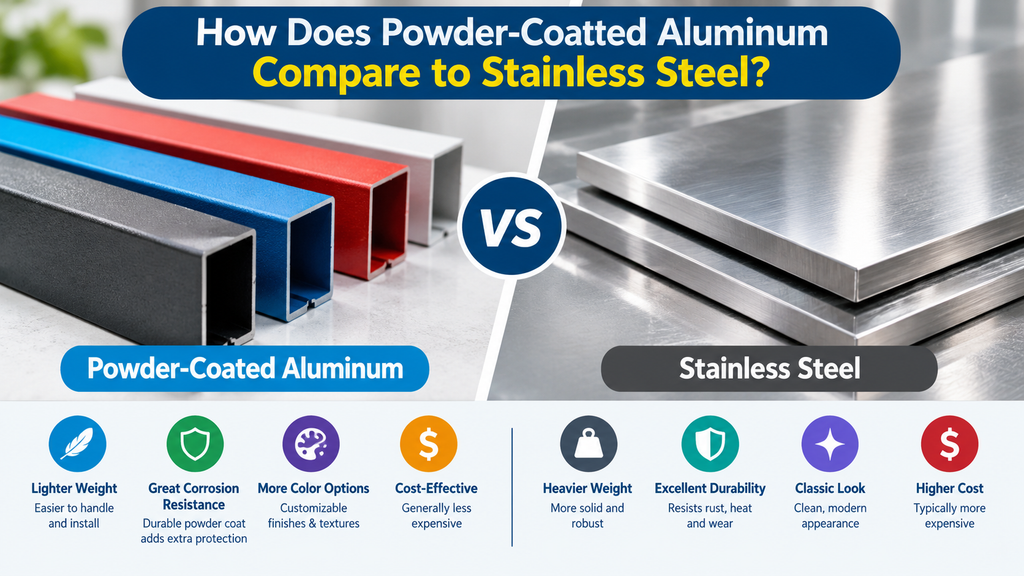
Powder-coated aluminum is a popular alternative to stainless steel because it’s naturally rust-resistant and significantly lighter, which makes installation and modification easier. The powder coating adds a layer of color and texture options that plain stainless steel can’t match, letting homeowners choose finishes that mimic wood grain or matte black without sacrificing weather resistance. Aluminum cabinets also tend to cost less than comparable stainless steel options, making them a common choice for homeowners who want durability without the premium price tag of marine-grade steel.
Is Wood a Practical Choice for Outdoor Kitchen Cabinets?
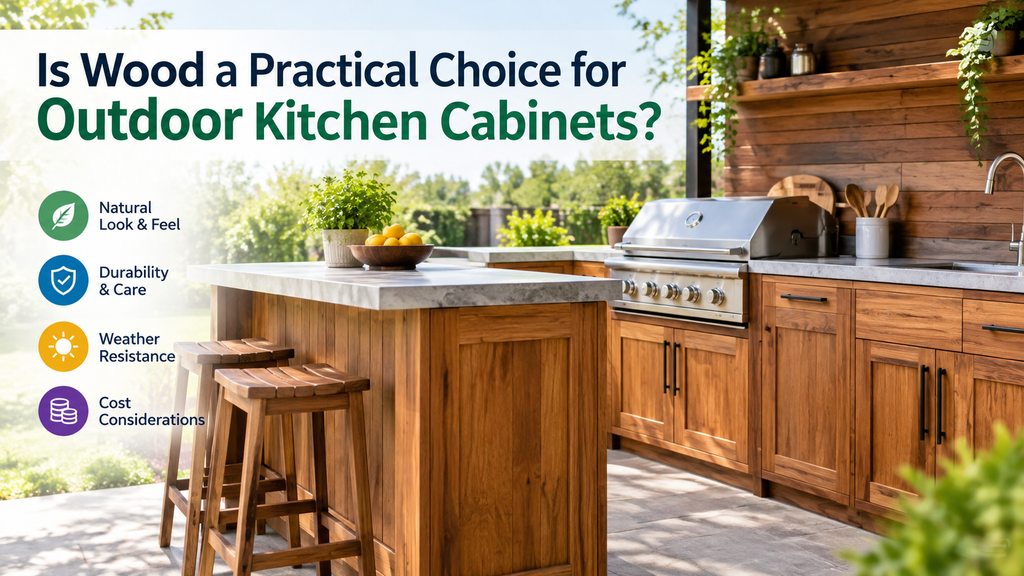
Wood is the easiest material for do-it-yourself outdoor kitchen cabinets but requires significantly more maintenance than metal or polymer alternatives. If wood is used, it should be a hardwood specifically rated for outdoor use, such as teak, which naturally resists rot better than softer woods. Even with proper sealing, whether painted or stained, wood cabinets need regular reapplication of protective finishes to prevent water damage, and they remain the least weather-resistant option among common outdoor cabinet materials, particularly in humid or rainy climates.
What About HDPE and Polymer Cabinets?
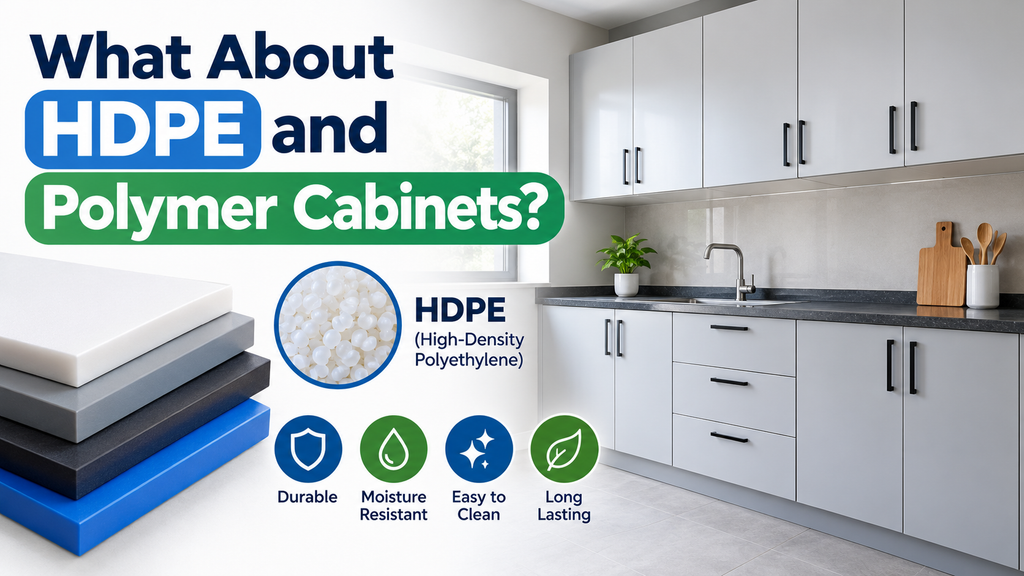
High-density polyethylene, commonly known as HDPE, is a marine-grade plastic material that has become popular for outdoor kitchen cabinets because it requires almost no maintenance and never rusts. HDPE cabinets won’t rot, warp, or corrode the way wood or lower-grade metals can, which makes them appealing for homeowners who want a low-upkeep outdoor kitchen. The tradeoff is aesthetic: while higher-end HDPE models include texturing designed to mimic natural materials from a distance, the material’s plastic origin is usually noticeable up close, and buyers should also check for UV inhibitors, since untreated polymer can fade or become brittle under prolonged sun exposure.
How Should Climate Affect Your Material Choice?
Climate is the single biggest factor in choosing outdoor kitchen cabinet material, since humidity, salt air, and freeze-thaw cycles each stress materials differently. Homes in coastal or marine environments should prioritize marine-grade stainless steel specifically because standard steel grades corrode faster when exposed to salt air, while homes in moderate, drier climates have more flexibility to use wood or standard aluminum without accelerated deterioration. Regions with harsh winters need cabinets that can handle repeated freezing and thawing without cracking, which favors stainless steel, aluminum, or HDPE over wood or lower-grade metal options.
What Role Does Hardware Play in Durability?
Hardware quality matters as much as the cabinet body material itself, since hinges, handles, and drawer rollers are often the first components to fail in outdoor conditions. Componentry should be specifically rated for external use, because standard indoor hardware will corrode and seize up far faster than the cabinet material surrounding it. Fully enclosed cabinet designs with weatherproof sealing around doors and drawers also outperform designs that rely solely on the countertop above for protection from rain and moisture intrusion.
What Styles and Finishes Are Popular in 2026?
Outdoor kitchen cabinets in 2026 increasingly mix materials and finishes rather than relying on a single uniform look across the entire kitchen. Combining stainless steel drawers with wood-grain textured panels, or pairing matte black coatings with natural stone countertops, has become a common way to add visual interest while maintaining weather resistance throughout. Modern outdoor cabinet lines increasingly compete directly with indoor kitchen aesthetics, offering modern lines and refined finishes rather than the purely utilitarian look older outdoor kitchens were known for.
How Much Do Outdoor Kitchen Cabinets Typically Cost?
Pricing varies significantly by material and whether the cabinets are portable units or built-in modules designed for permanent installation. Budget-friendly portable prep tables and carts are generally available under $300, while built-in stainless steel drawer systems designed to be integrated into a masonry or stone BBQ island cost considerably more due to both material and installation requirements. Wood cabinets can sometimes undercut the cost of a single stainless steel or polymer unit for an entire kitchen’s worth of cabinetry, though this upfront savings needs to be weighed against the higher long-term maintenance wood requires.
Common Misconceptions About Outdoor Kitchen Cabinets
A common misconception is that any stainless steel is equally durable outdoors. In practice, grade matters significantly, and 304-grade stainless steel substantially outperforms lower grades in resisting the rust and corrosion that outdoor exposure accelerates. Another misconception is that polymer or HDPE cabinets always look artificial; while this was true of older models, higher-end HDPE cabinets now include textured finishes that closely approximate natural materials, even though a close inspection usually still reveals the material’s plastic origin.
Some homeowners also assume wood cabinets are simply unsuitable for outdoor use. In reality, properly sealed hardwoods like teak can perform well for years, particularly in drier, more moderate climates, though they will never match the low-maintenance durability of metal or polymer alternatives in consistently wet or humid regions.
Conclusion
Outdoor kitchen cabinets need to balance durability, climate suitability, and aesthetics, with marine-grade 304 stainless steel standing out as the most reliable long-term choice, followed by powder-coated aluminum and HDPE as lower-maintenance alternatives. Wood remains a viable option primarily in moderate climates and for homeowners willing to maintain protective sealants over time. Readers planning an outdoor kitchen might also want to explore countertop material options like granite and bluestone, or research outdoor-rated flooring choices that complete the overall design.
Frequently Asked Questions (FAQs)
1. What is the best material for outdoor kitchen cabinets?
Stainless steel, especially 304-grade stainless steel, is an excellent choice because it offers strong corrosion resistance, durability, and protection against outdoor weather conditions.
2. Are outdoor kitchen cabinets waterproof?
Many outdoor kitchen cabinets are designed to resist water and moisture, but not all are completely waterproof. Weather-resistant materials, sealed doors, and proper drainage help protect the cabinets.
3. Is aluminum good for outdoor kitchen cabinets?
Yes, powder-coated aluminum is lightweight, rust-resistant, and available in different colors and finishes, making it a practical option for outdoor kitchens.
4. Can wood cabinets be used outdoors?
Yes, outdoor-rated hardwoods such as teak can work well outdoors. However, they require regular sealing and maintenance to protect against moisture, rot, and weather damage.
5. What are HDPE outdoor kitchen cabinets?
HDPE cabinets are made from high-density polyethylene, a durable plastic material that resists moisture, rot, and corrosion while requiring minimal maintenance.
6. How do I protect outdoor kitchen cabinets from rust?
Choose corrosion-resistant materials such as 304-grade stainless steel or aluminum, use outdoor-rated hardware, clean surfaces regularly, and avoid allowing water to collect around cabinet joints.
7. How much do outdoor kitchen cabinets cost?
Costs depend on the material, size, design, and installation requirements. Basic portable prep carts may cost under $300, while custom-built cabinet systems can be considerably more expensive.
8. Which outdoor kitchen cabinets are best for coastal areas?
Marine-grade 316 stainless steel generally offers better resistance to salt corrosion than 304 stainless steel. Aluminum and suitable HDPE cabinets are also options for coastal environments.
9. Do outdoor kitchen cabinets need special hardware?
Yes, outdoor-rated hinges, handles, drawer slides, and fasteners are recommended because they are designed to handle moisture, temperature changes, and outdoor exposure.
10. How long do outdoor kitchen cabinets last?
Their lifespan depends on material quality, climate, installation, and maintenance. Stainless steel, aluminum, and HDPE cabinets can last for many years when properly selected and cared for.