


FTAsiaStock business news today refers to ongoing coverage of financial and corporate developments across Asian markets, spanning corporate strategy, mergers and acquisitions, earnings reports, and sector-wide economic shifts. This coverage tracks corporate developments, M&A activity, earnings reports, and executive insights across Asian markets. Rather than focusing on a single breaking headline, it gives readers ongoing context for how companies, industries, and economic policy shifts are shaping the region’s business landscape.
FTAsiaStock Business News: Key Updates and Market Insights
Key Takeaways
- FTAsiaStock business news tracks corporate activity, M&A deals, earnings reports, and executive moves across Asian markets.
- Technology and semiconductors dominate coverage because chip demand signals broader trends in AI infrastructure and cloud computing.
- Coverage spans multiple sectors — finance, consumer goods, industrials, healthcare, real estate, and energy — not just tech headlines.
- A rumored deal, an announced agreement, regulatory approval, and a completed acquisition are four different stages — treat them differently.
- The FTAsiaStock name appears across several similarly-branded sites, so cross-check specific figures against primary sources before acting on them.
What Does FTAsiaStock Business News Actually Cover?

FTAsiaStock business news centers on business, financial, and market developments connected to Asia and the wider global economy. Readers searching the term are usually looking for company updates, industry trends, market context, and economic changes rather than a single breaking story. The coverage spans corporate updates, emerging industries, market movements, finance, and broader economic changes across the region. Topcryptooutreach
Coverage spans all major industry sectors present in Asian markets, including technology, financial services, consumer goods, industrials, healthcare, real estate, and energy. Technology tends to dominate headlines given the concentration of major chipmakers and software companies in the region, but the scope extends well beyond any single sector.
How Does It Track Corporate Activity and Deals?

Mergers, acquisitions, and corporate restructuring are a recurring focus because these transactions reshape competitive dynamics across entire industries. M&A activity becomes particularly relevant when transactions involve Asian companies, cross-border expansion, or major industries, and readers should understand the stage of a deal, since a rumor, an announced agreement, regulatory approval, and a completed acquisition are not the same thing.
Coverage also looks past headline earnings numbers to examine what’s actually happening operationally within a business. This includes examining product launches succeeding or failing, geographic expansions working or struggling, and management changes that signal strategic shifts. Leadership transitions in particular are treated as meaningful signals, since a change in executive leadership often precedes a shift in company strategy or direction.
Why Does the Technology Sector Get So Much Attention?

Technology developments matter because they ripple into nearly every other business sector, from banking to healthcare to retail. FTAsiaStock technology coverage tracks AI, semiconductors, fintech, and cloud trends shaping markets, businesses, and investments. Semiconductor developments in particular serve as a bellwether for the broader technology sector’s direction.
Companies such as TSMC play a significant role in global chip production, manufacturing advanced semiconductors used across the technology industry, and rising chip demand can signal stronger growth in areas like AI infrastructure, cloud computing, and digital transformation. That said, the sector isn’t without risk. Supply chain issues, high production costs, and geopolitical factors can all influence company performance and investor expectations, which is why chip-sector news tends to move markets beyond the companies directly involved.
What Should Readers Understand About Asia’s Market Diversity?
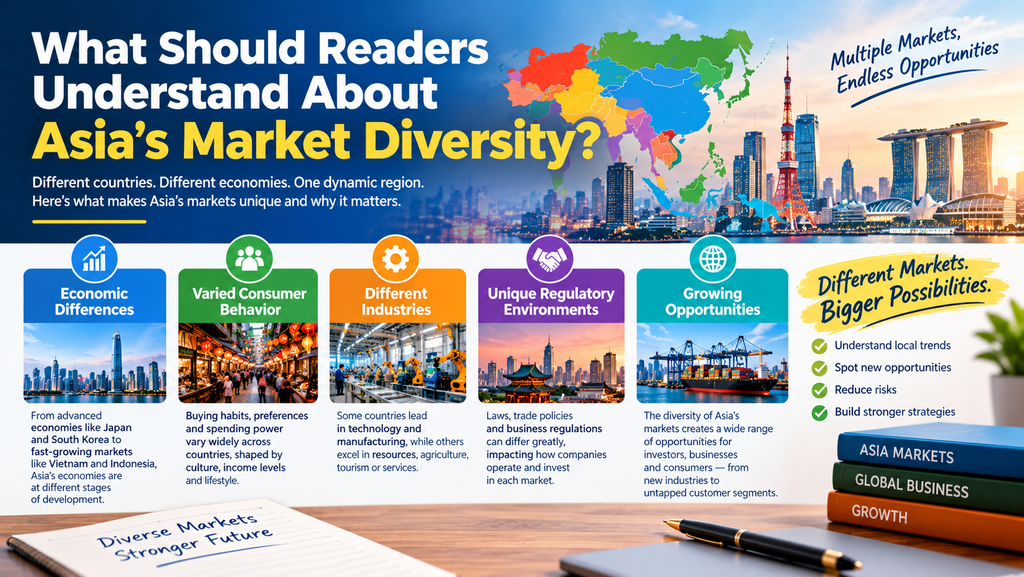
Asia’s corporate landscape is unusually varied, which shapes how business news from the region should be read. The region’s corporate sector spans everything from centuries-old family conglomerates to venture-backed unicorns, and from state-owned enterprises pursuing national priorities to multinational subsidiaries competing in regional markets. That diversity means a single story rarely tells the whole picture; a policy shift affecting state-owned enterprises, for instance, may have little bearing on a venture-backed tech startup operating in the same country.
Cross-sector questions often reveal more than sector-specific analysis alone. Relevant questions include how traditional retailers are responding to e-commerce disruption, which manufacturers are successfully transitioning to electric vehicles, and where healthcare companies are finding growth as populations age. These intersecting trends frequently expose opportunities and risks that a narrower, single-sector view would miss.
How Should Readers Evaluate This Kind of Financial Content?

A practical habit worth adopting is asking three consistent questions of any business update: what changed, why it changed, and which companies or sectors are affected. This approach keeps coverage useful even when the underlying story is complex or unfolding in real time.
It’s also worth noting that “FTAsiaStock” appears across multiple similarly named websites with overlapping content. Because the name appears across several related-looking pages online, readers benefit from understanding what the business-news coverage generally includes and evaluating the information’s sourcing before relying on it for investment decisions. As with any financial content, cross-referencing specific figures or claims against primary sources like company filings or established financial news outlets is a reasonable precaution before acting on the information.
Common Misconceptions About Asian Market Coverage

A frequent misconception is that Asian business news moves in lockstep, as though the region behaves like a single market. In practice, markets in Japan, South Korea, China, India, and Southeast Asia often respond to entirely different domestic drivers, even when global factors like U.S. interest rates or oil prices affect all of them simultaneously.
Another misconception is that M&A rumors and completed deals carry the same weight. As noted earlier, a reported acquisition target and a regulator-approved, closed transaction represent very different levels of certainty, and treating them the same can lead to misplaced conclusions about a company’s direction.
Conclusion
FTAsiaStock business news today functions as an umbrella term for ongoing coverage of corporate activity, market movements, and economic developments across Asia, spanning sectors from technology and finance to healthcare and industrials. Readers get the most value from this kind of coverage by tracking not just what happened, but why it happened and which businesses are likely to be affected. From here, it’s worth exploring how specific sectors like semiconductors or fintech are trending, or how regional economic policy shifts are influencing cross-border investment.



hello