
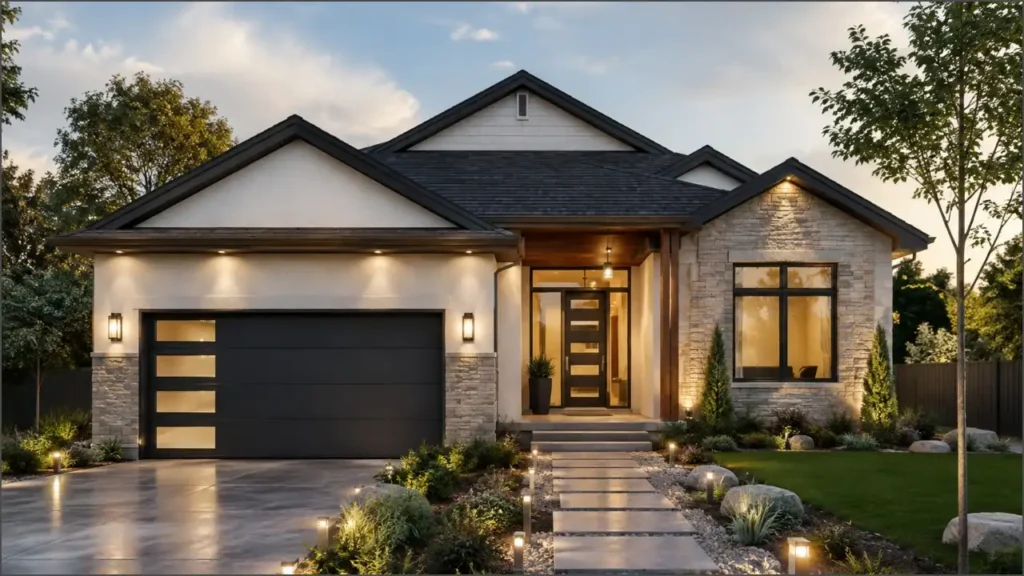

Exterior design refers to the deliberate planning of a home’s outward appearance, covering color, materials, architectural details, lighting, and landscaping to create a cohesive and functional look. In 2026, exterior design has shifted toward warm, layered materials and practical upgrades that hold up over time rather than chasing short-lived trends. A well-executed exterior design increases curb appeal, supports long-term property value, and reflects the personality of the people living inside.
Exterior Design Trends Summary (2026)
A quick-reference summary of the key exterior design trends shaping homes in 2026.
| Design Area | Key Trend | Stat / Detail |
|---|---|---|
| Color Palette | Warm neutrals (beige) replacing cool tones | Beige: 24% (up from 10% in 2024); White: 14%; Gray: 12% |
| Trim Color | Black trim stays popular | Works across architectural styles, pairs with warm beige walls |
| Materials & Texture | Mixed materials over single-surface | Stone + wood siding, brick + vertical siding, metal + organic accents |
| Farmhouse Style | Overly themed farmhouse fading | Less barn lights, less excessive black metal accents |
| Architectural Details | Beams & columns making a comeback | Beams: 43% (+24 pts since 2024); Columns: 42%; Awnings: 30%; Shutters: 19% |
| Sustainability | Eco-conscious materials & drainage | Permeable pavers reduce runoff and improve drainage |
| Technology | Smart lighting & hidden solar | Solar panels blending into roofing, architecture-highlighting lighting |
| Outdoor Living | Large-format pavers & multi-use space | Oversized porcelain/concrete pavers for expansive, clean-lined patios |
Based on 2026 industry trend reports. Actual popularity and pricing of materials may vary by region and market.
What Is Exterior Design and Why Does It Matter?
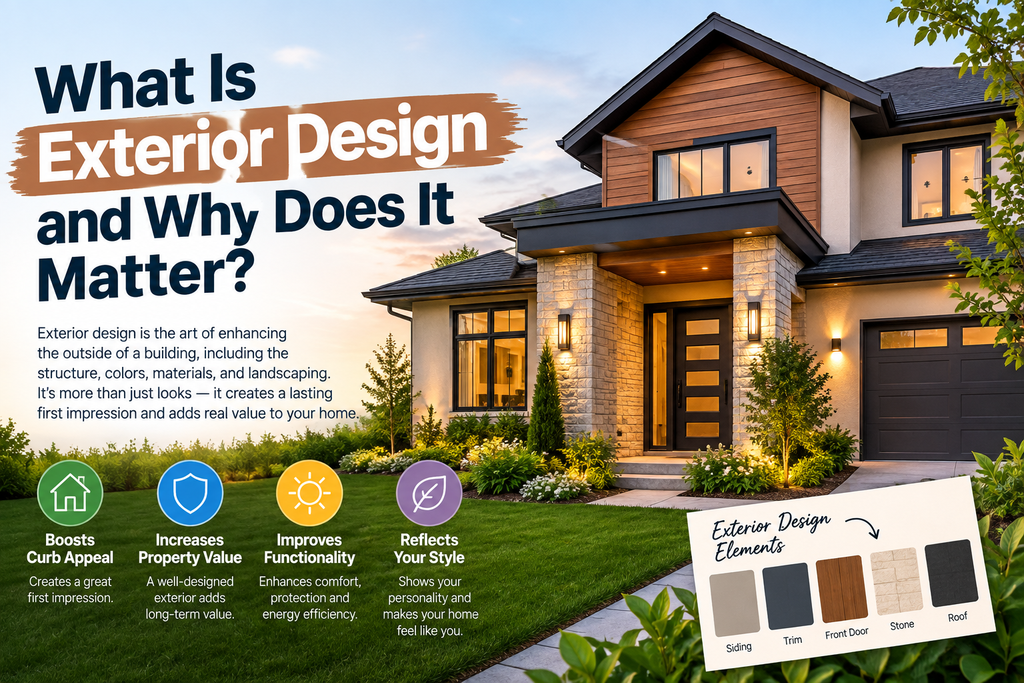
Exterior design is the practice of shaping how a building looks and functions from the outside, including its color palette, siding, rooflines, entryways, windows, and outdoor living spaces. It matters because the exterior is the first impression a home makes, and it directly affects resale value, energy efficiency, and how comfortable outdoor spaces feel to use. According to the 2026 Houzz Outdoor Trends Study, exterior renovations are increasingly practical and comprehensive, reflecting a broader shift toward designs that are functional, long-lasting, environmentally friendly, and hold a timeless appeal.
Good exterior design also balances aesthetics with durability. Materials that fade or need constant upkeep can make a home look tired within a few years, which is why homeowners are increasingly prioritizing finishes that age gracefully over trend-driven choices.
What Color Palettes Are Trending in Exterior Design?
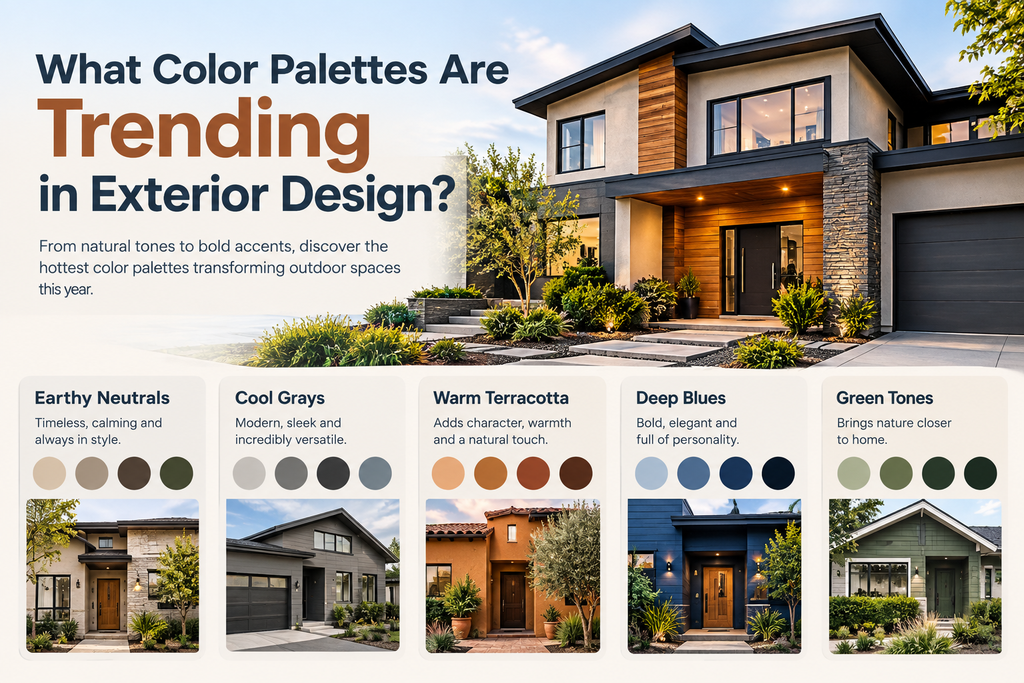
Warm, earthy neutrals have replaced the cool grays and stark whites that dominated exterior design for the past decade. Beige has become the most popular exterior wall color among homeowners, more than doubling in popularity from 10% in 2024 to 24% in 2026, while white has slipped to 14 percent and gray has fallen to 12 percent of projects. This warming trend reflects a desire for exteriors that feel more organic and blend naturally with landscaping rather than standing in stark contrast to it.
Trim colors are moving in the opposite direction from wall colors, staying dark and defined even as walls warm up. Black trim remains popular because it works across architectural periods and adds definition without requiring a bold color commitment on the body of the home. The pairing of a warm beige exterior with crisp black trim has become one of the most reliable combinations for homeowners who want an updated look without a dramatic style shift.
How Are Materials and Textures Changing in Exterior Design?
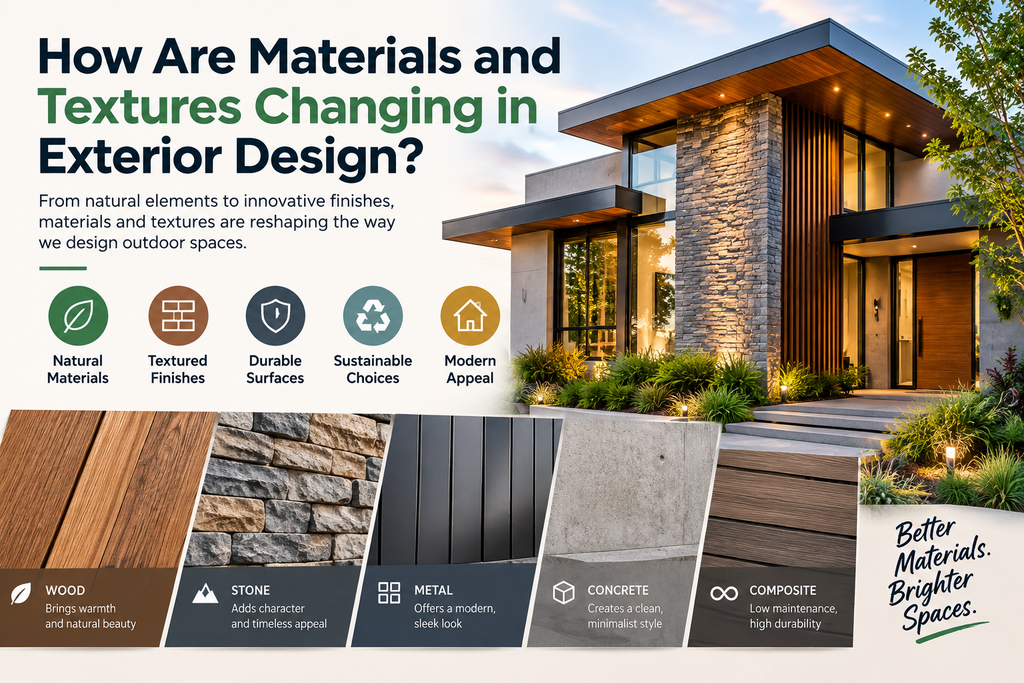
Exterior design in 2026 favors mixed materials and layered textures over single-surface facades. Homes are increasingly combining stone with wood-look siding, brick with vertical siding, limewash with natural wood, mixed-width siding profiles, and metal accents paired with organic materials to create visual depth. Rather than cladding an entire home in one material, layering brick with wood accents, stone features, and metal elements gives a structure more character and a sense of intentional design.
This shift away from flat, single-material exteriors is driven partly by a desire for homes that feel custom rather than mass-produced. A brick base transitioning into sleek metal trim, or smooth wood planks paired with stone accents, creates the kind of textured contrast that reads as thoughtfully designed rather than default.
What Materials Are Falling Out of Favor?
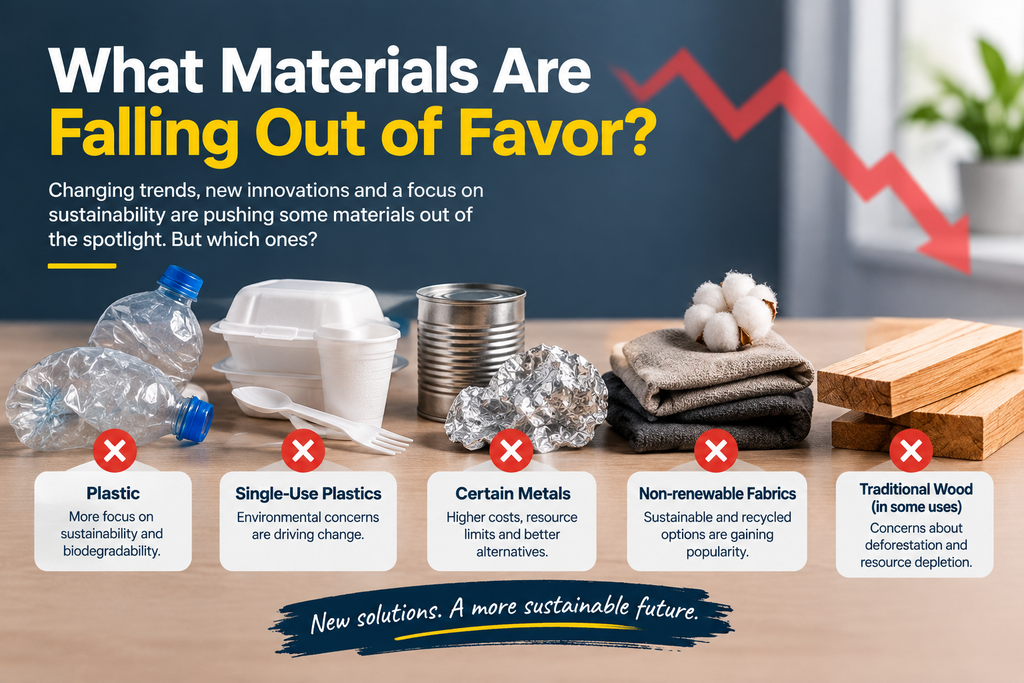
Overly themed farmhouse styling is losing ground even as the broader farmhouse aesthetic remains popular. Homeowners are moving away from excessive black metal accents, barn lights on every surface, and overly rustic detailing that once defined the farmhouse look. This suggests exterior design is trending toward restraint: using strong architectural elements sparingly rather than layering on every trend at once.
What Architectural Details Are Defining 2026 Exteriors?
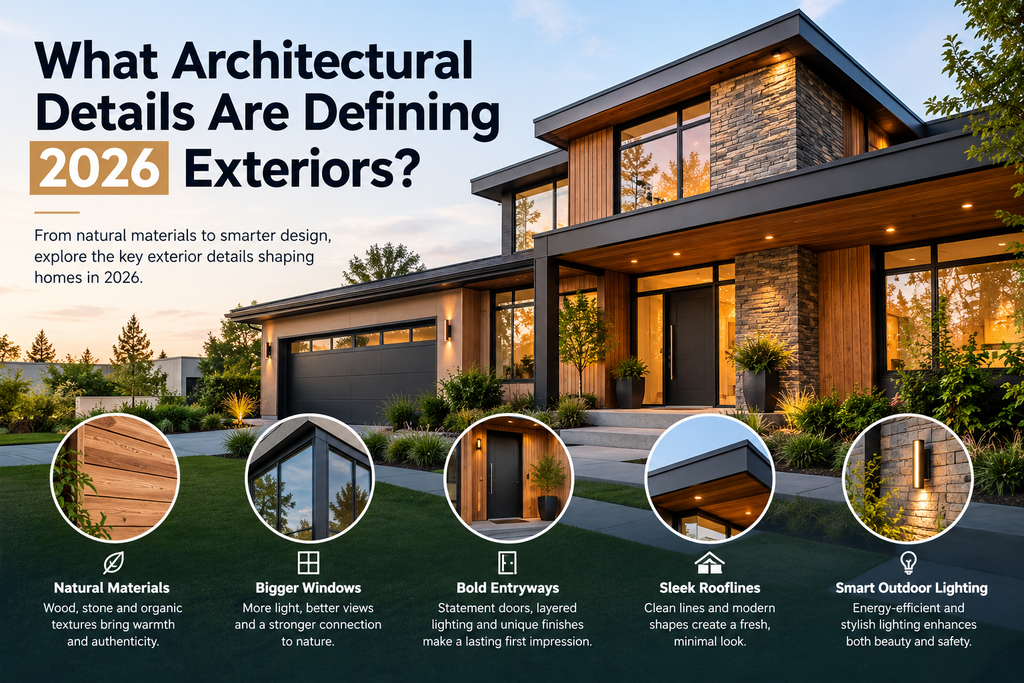
Structural features like beams and columns are becoming central to exterior design rather than purely decorative additions. Beams were among the fastest-growing exterior features tracked by Houzz, jumping 24 percentage points since 2024 to 43 percent of projects, while columns or pillars appeared in 42 percent of projects, awnings in 30 percent, and shutters in 19 percent. These details are commonly incorporated into covered patios, front porch additions, and structural pergolas, extending usable outdoor space while adding architectural dimension.
This return to character-building details marks a shift from the minimalist modern farmhouse look toward exteriors with more visible craftsmanship. A covered porch with columns or a pergola with exposed beams signals intentional design rather than a generic build, and it gives homeowners functional outdoor space alongside the visual upgrade.
How Is Sustainability Shaping Exterior Design?
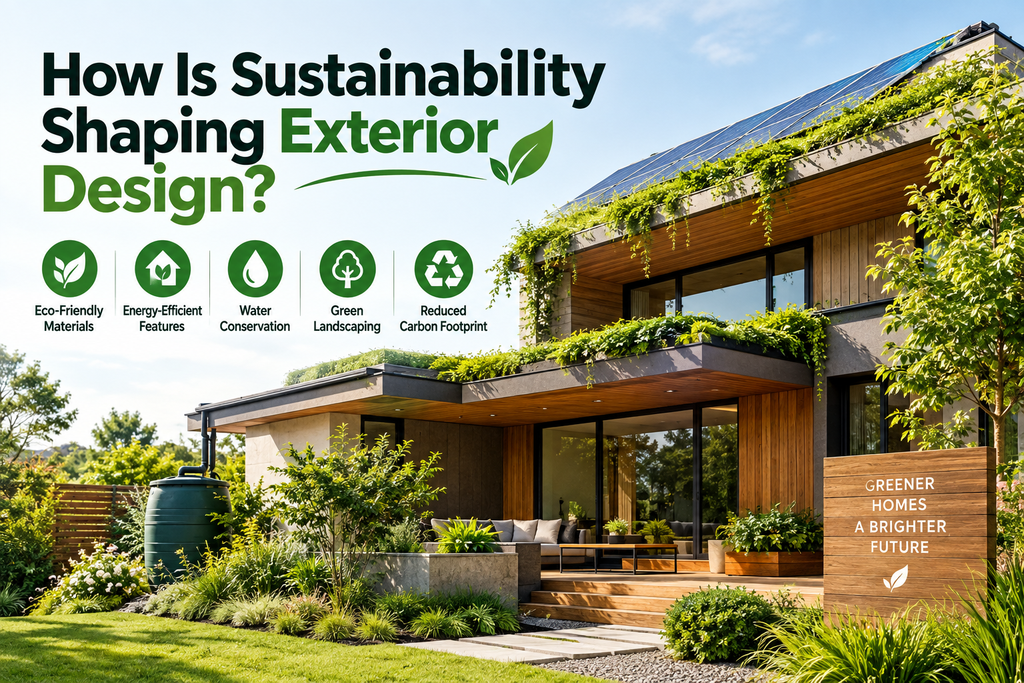
Sustainability has moved from an optional feature to an expected part of exterior design, influencing everything from material choice to hardscaping. Homeowners are increasingly considering how their exteriors affect energy efficiency, stormwater management, and the embodied carbon in building materials. This shift reflects growing awareness that exterior choices have environmental consequences beyond curb appeal.
Permeable pavers illustrate this shift in practice. Designed to let water pass through the surface rather than run off into streets or neighboring properties, they can mean fewer puddles after a storm, better drainage, and a yard that feels more resilient during heavy rain events. This kind of practical, function-first thinking has become a defining feature of exterior design in regions dealing with more intense rainfall.
How Is Technology Being Integrated Into Exterior Design?
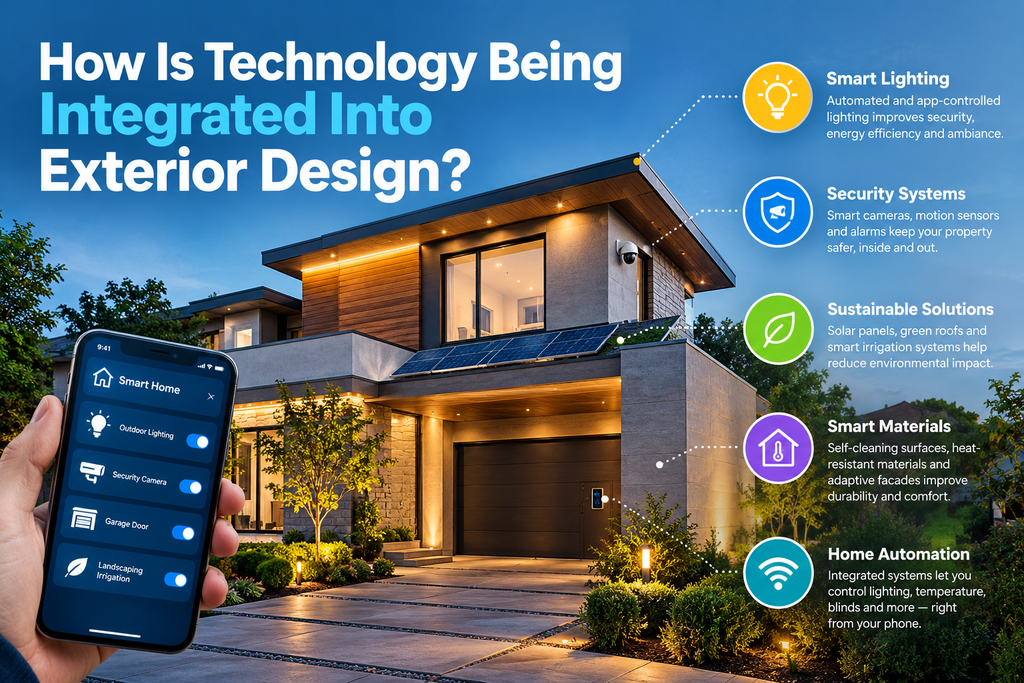
Smart technology is increasingly woven into exterior design rather than added as a visible afterthought. Homeowners are incorporating smart lighting systems that highlight a home’s architecture and solar panels that blend into roofing instead of sitting as obvious add-ons. This reflects a broader trend of technology quietly supporting the look of a home rather than competing with it.
Lighting in particular has become a design tool rather than a purely functional feature. Well-placed exterior lighting can accentuate architectural details like columns, beams, or textured siding after dark, extending the visual impact of exterior design choices beyond daylight hours.
How Are Outdoor Living Spaces Factoring Into Exterior Design?
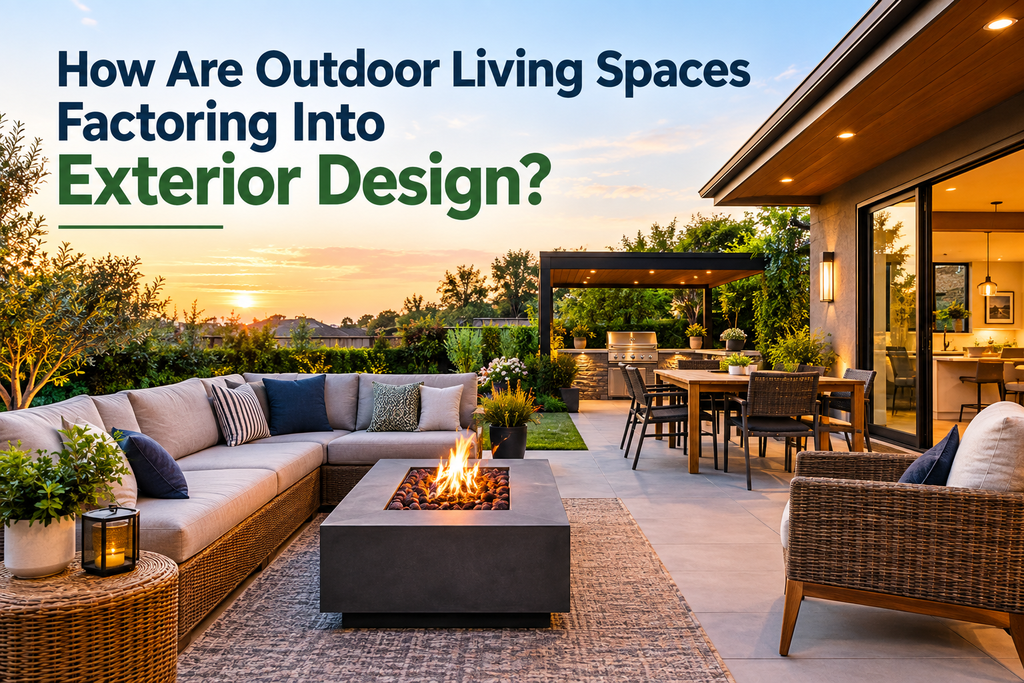
Outdoor living spaces such as driveways, walkways, patios, and pool decks have become as important to exterior design as the vertical facade of a home. Large-format pavers, particularly oversized porcelain or concrete options, are gaining popularity because they make a patio feel more expansive with clean lines and minimal joints. This aesthetic pairs naturally with the mixed-material approach shaping the rest of the exterior.
The growing emphasis on multi-purpose living space also extends outward. Homeowners are treating exteriors as functional extensions of the home rather than purely decorative surfaces, whether that means a covered patio doubling as an outdoor living room or a driveway designed with permeable materials for practical drainage benefits.
Common Misconceptions About Exterior Design
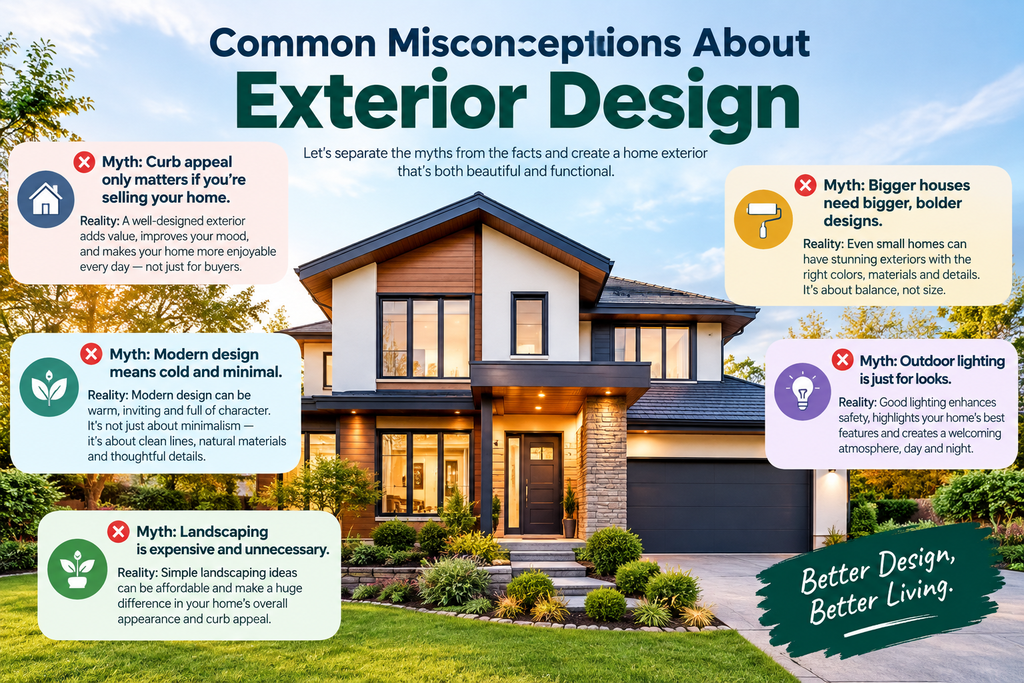
A common misconception is that exterior design is primarily about color and paint. In reality, color is only one layer; material selection, architectural detailing, lighting, and landscaping all interact to create the finished look, and neglecting any one of these elements can undermine an otherwise well-chosen color palette. Another misconception is that bold, trend-forward choices age better than neutral ones. In practice, exteriors built around timeless materials and restrained detailing tend to hold their appeal longer than those chasing a single dominant trend.
Some homeowners also assume exterior upgrades are less impactful than interior renovations. Because the exterior is the first thing anyone sees, whether a potential buyer, a neighbor, or the homeowner returning home each day, a well-planned exterior can meaningfully shift how a property is perceived without the disruption of a full interior remodel.
Conclusion
Exterior design in 2026 centers on warm, layered materials, architectural details like beams and columns, and a growing focus on sustainability and quiet technology integration. Rather than chasing a single dominant look, the strongest exteriors combine timeless color choices with textured materials and functional outdoor spaces that hold up over time. Homeowners exploring this topic further might also look into landscaping design principles or energy-efficient window and siding options, both of which work closely alongside exterior design to shape a home’s overall curb appeal.