

BackToFrontShow pricing information circulating online is inconsistent and unverified, with different sources listing contradictory numbers, membership tiers, and even entirely different descriptions of what the product is. Some articles describe a podcast analytics platform priced at $1,200 to $3,600 per month, while others describe an online learning membership priced between $29 and $99 per month with a lifetime deal option. Because no single, consistent official source confirms either version, readers should treat any specific “BackToFrontShow pricing” figure they find online with significant skepticism until they can verify it directly.
What Is BackToFrontShow Supposed to Be?
BackToFrontShow doesn’t have a single, consistent public identity across the sources describing it. Articles disagree fundamentally on what the product actually is: some frame it as a podcast analytics platform aimed at creators and media teams tracking listener demographics and engagement, while others describe it as an online learning or coaching membership with episodes, worksheets, and live coaching calls. These aren’t variations on the same product; they are two unrelated categories of business entirely, which is a strong signal that the content describing BackToFrontShow isn’t drawing from a single verified source.
This kind of fundamental disagreement about a product’s category, not just its price, almost never happens with real, established businesses. Legitimate companies maintain one consistent description of what they sell across their own website and credible third-party coverage, even if exact pricing details update over time.
Why Do the Pricing Numbers Contradict Each Other?

The pricing figures found online for BackToFrontShow don’t just vary slightly, they conflict outright. One set of sources lists a Basic plan at $1,200 per month and a Pro plan at $3,600 per month, positioning the product as an expensive enterprise analytics tool. A separate set of sources lists a Core plan at $29 per month and a Pro plan at $99 per month, along with a one-time lifetime deal of $497, positioning the product as an affordable consumer subscription. These numbers aren’t close enough to reflect normal pricing updates or regional differences; they describe two entirely different pricing philosophies.
This pattern is consistent with automated or templated content generation rather than genuine reporting on a real company’s pricing page. When multiple articles published within weeks of each other describe the same product name with completely different prices, categories, and feature sets, it strongly suggests the content was generated to target search traffic around a trending phrase rather than researched from an actual source.
How Can You Tell If Pricing Content Like This Is Reliable?
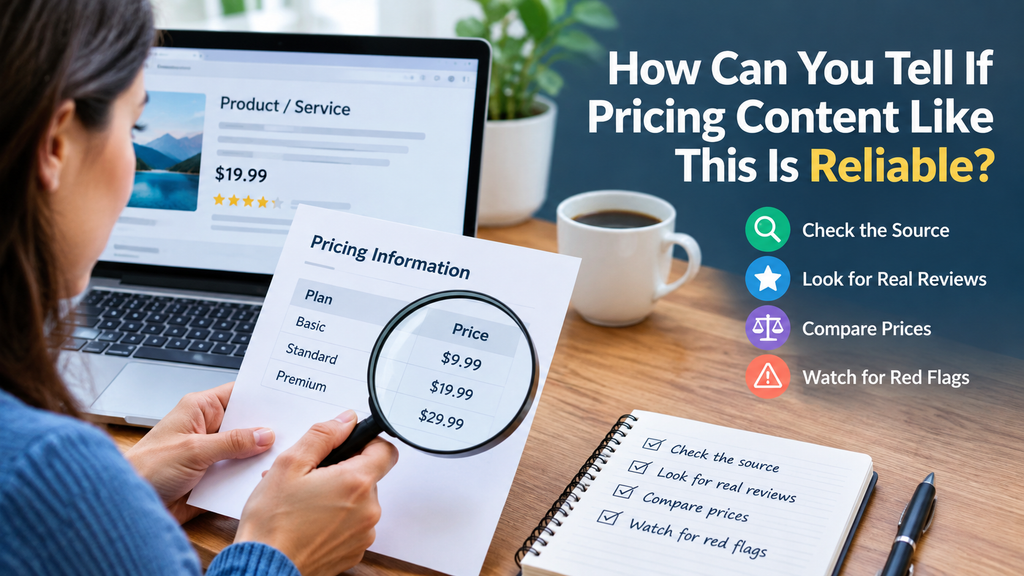
Check whether the pricing claims trace back to an identifiable, functioning company website with consistent branding, contact information, and customer reviews from independent sources. Reliable pricing information should be traceable to one authoritative source, typically the company’s own pricing page, rather than a collection of third-party articles that each describe different numbers. If multiple “explainer” articles about the same product disagree on fundamental facts like what the product does or what it costs, that’s a clear signal the underlying information hasn’t been independently verified.
What Should You Do Before Trusting Any BackToFrontShow Pricing Figure?
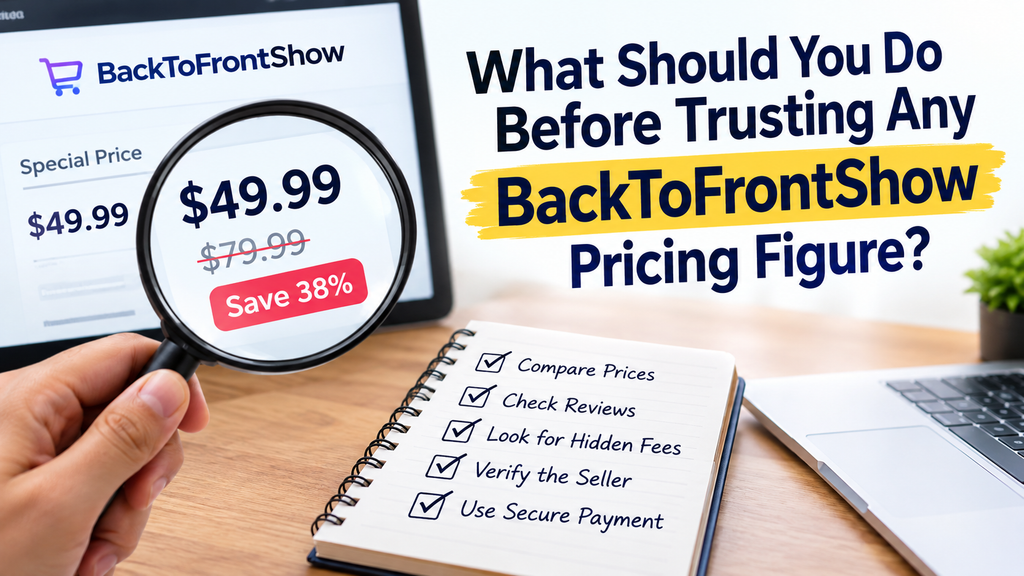
Verify any pricing claim directly with the company rather than relying on secondary articles. Searching for the business name alongside terms like “official website,” “contact,” or “support” can help determine whether a real, operating company stands behind the name, rather than relying on SEO-driven content describing numbers that may not correspond to anything real. If you cannot find a consistent, verifiable primary source, such as the company’s actual pricing page, documented customer reviews, or verifiable business registration, it’s reasonable to treat the pricing claims as unconfirmed.
What Are the Warning Signs of Unreliable Pricing Content?
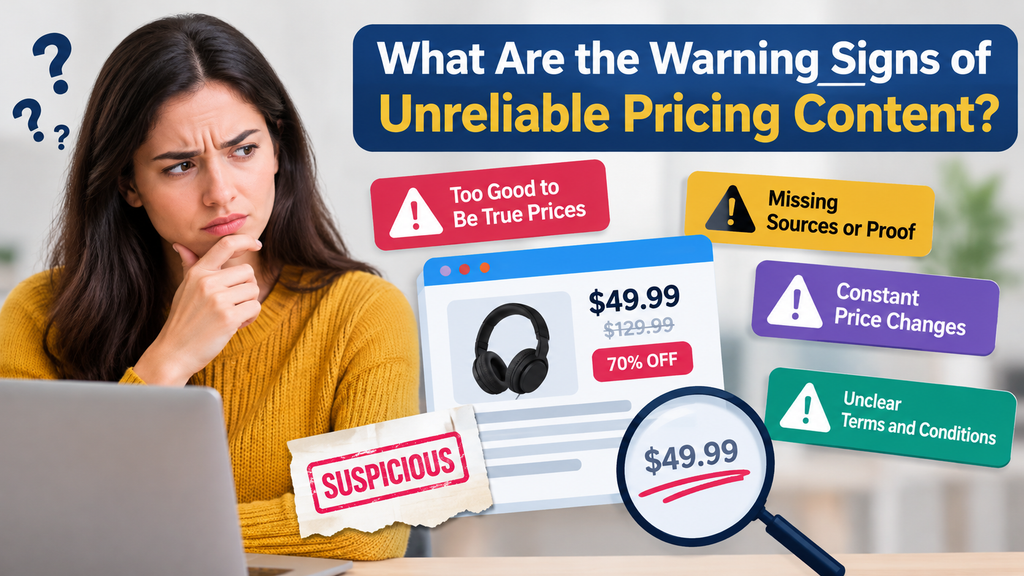
Contradictory core facts across multiple articles, such as different descriptions of what a product actually does, are the clearest warning sign that pricing information isn’t trustworthy. Other signs include articles published in rapid succession across unrelated low-authority domains, template-like structure with repeated phrases such as “Pricing at a Glance” across sites with no shared ownership, and a lack of any single authoritative source like a functioning official website that all the articles reference back to.
Common Misconceptions About Researching Product Pricing Online
A common misconception is that if multiple websites report the same figure, it must be accurate. In reality, templated or automated content can replicate the same number across many domains without any of them having verified it independently, creating a false sense of consensus. Another misconception is that a polished-looking article with tables, FAQs, and structured headings is inherently more credible; formatting alone doesn’t indicate that the underlying facts were verified, and in cases like this one, well-formatted articles contradict each other on basic details like what the product is.
Readers should also avoid assuming that because a name sounds like a real product, a corresponding real company with that exact pricing structure necessarily exists. Content can be generated around a search term even when the underlying product description is inconsistent or possibly fabricated.
Conclusion
The pricing information currently available online for BackToFrontShow is contradictory and cannot be independently verified, with sources disagreeing on both what the product is and what it costs. Rather than relying on any specific number found in search results, readers should look for a consistent, authoritative source, such as a functioning company website or verifiable customer reviews, before trusting any pricing claim. Readers researching unfamiliar products or services more broadly might also look into how to spot templated SEO content, or general guidance on verifying a company’s legitimacy before signing up for a paid plan.
Frequently Asked Questions
How much does BackToFrontShow actually cost?
This can’t be confirmed reliably. Sources online list conflicting figures — some claim $1,200 to $3,600 per month for a podcast analytics tool, others claim $29 to $99 per month for a learning membership. No single verified source confirms either.
Is BackToFrontShow a podcast analytics platform or an online learning service?
Sources disagree fundamentally on this, which is itself a red flag. Legitimate companies maintain one consistent product description across their own site and credible coverage.
Why do different articles report completely different prices for the same name?
This pattern is typical of templated or automated content generated to target search traffic around a trending phrase, rather than genuine reporting based on a verified source.
Does BackToFrontShow offer a free plan or trial?
Some sources claim a free tier exists; others don’t mention one at all. Without a verified official source, this can’t be confirmed either way.
How can I verify if a product’s pricing information is trustworthy?
Look for one authoritative source — typically the company’s own pricing page — along with consistent branding, contact information, and independent customer reviews, rather than relying on third-party “explainer” articles.
What should I do before paying for a product like this?
Search for the company name alongside terms like “official website” or “contact” to confirm a real, operating business exists before trusting any pricing claim found in secondary articles.