
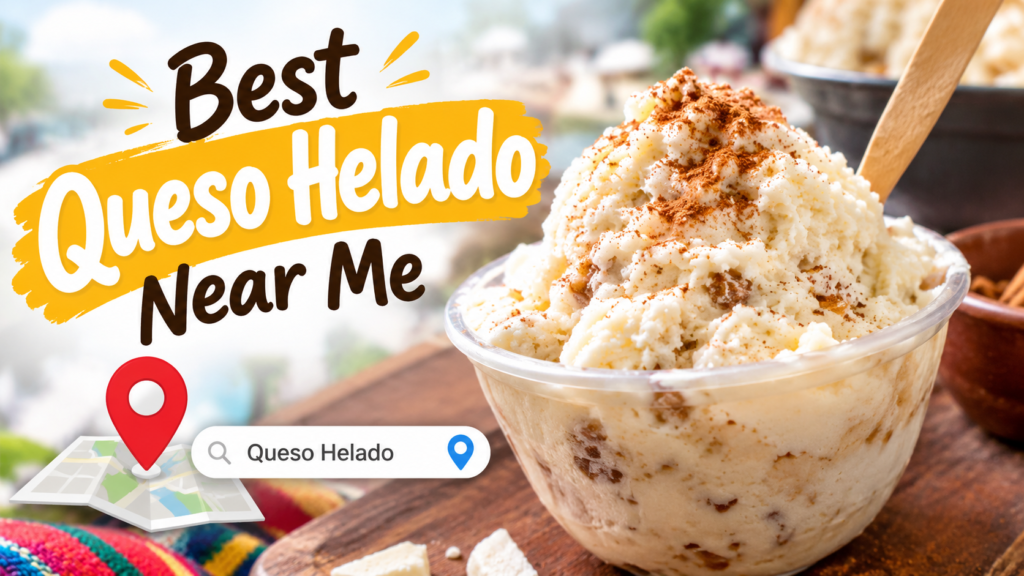

Queso helado is a traditional frozen dessert from Arequipa, Peru, made from fresh cow’s milk, cinnamon, cloves, and coconut rather than any actual cheese, despite its name translating to “frozen cheese.” Finding the best queso helado near you comes down to locating an authentic Peruvian restaurant, specialty ice cream shop, or Latin American bakery that follows the traditional Arequipan recipe rather than a generic coconut ice cream sold under the same name. This guide explains what makes queso helado authentic, how it’s made, and what to look for when searching for it nearby.
What Is Queso Helado?
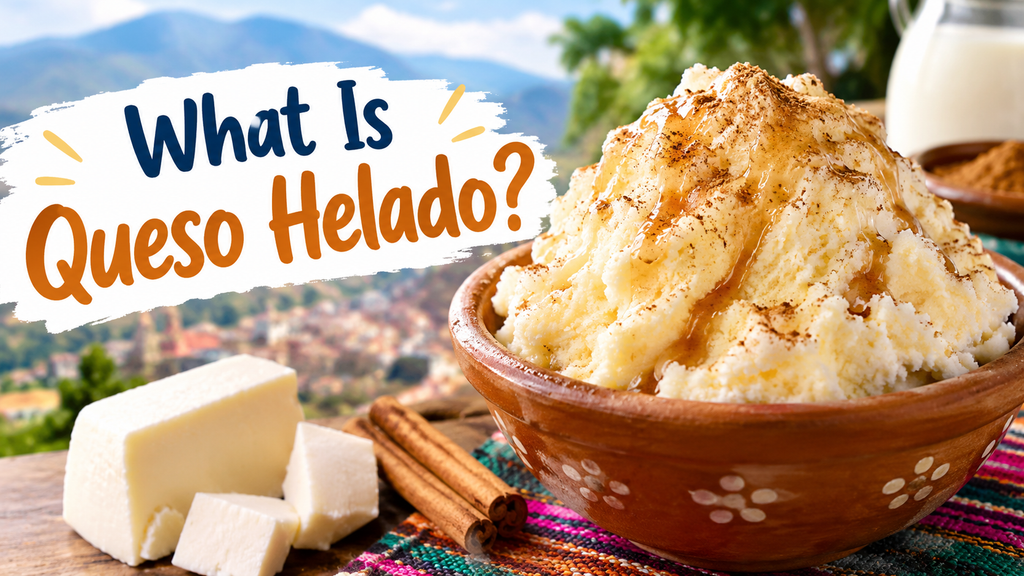
Queso helado is a traditional semifreddo-style frozen dessert that originated in Arequipa, one of Peru’s most respected culinary cities. The name translates to “frozen cheese” in English, but the dessert contains no cheese at all; the main ingredient is fresh cow’s milk, which hints at the origins of its name, while cinnamon, cloves, and coconut round out the traditional flavor profile. Its texture sits between ice cream and sorbet, with a slightly granular, creamy consistency that comes from the way it’s traditionally churned and frozen.
Why Is It Called “Frozen Cheese” If It Has No Cheese?

The name comes from the dessert’s appearance rather than its ingredients. According to Peruvian food historians, the chilled mixture was traditionally cut and served in slices resembling wedges of cheese, which led locals to start calling the dessert “queso helado” because of how closely it resembled sliced cheese once frozen and portioned. This visual resemblance, rather than any dairy connection beyond milk, is why the name has persisted for generations despite being misleading to first-time tasters.
Where Did Queso Helado Come From?
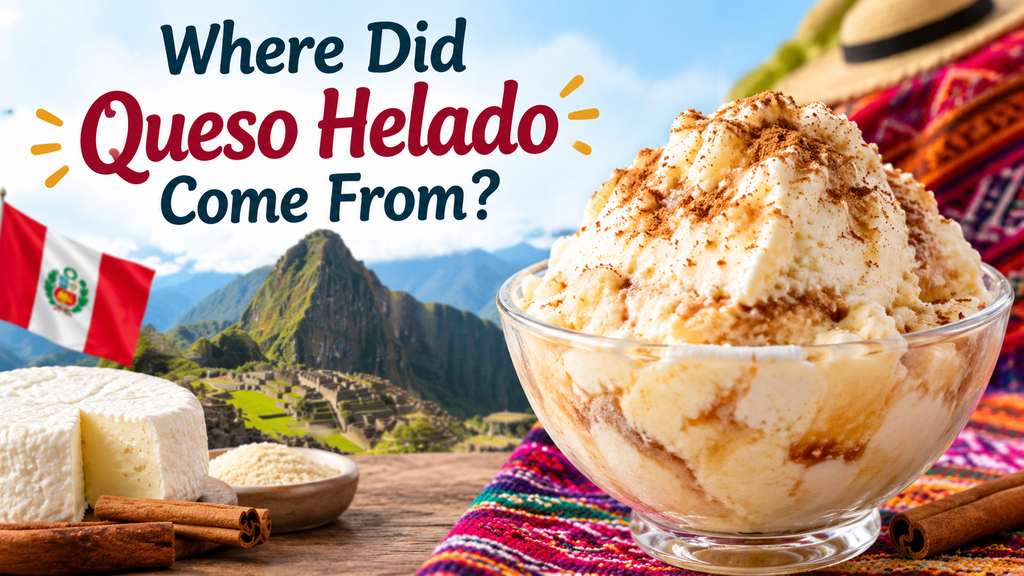
Queso helado traces its origins to colonial-era Arequipa, with historical accounts crediting its creation to nuns at a historic local convent. Historians note that the dessert was first prepared by the Catholic nuns at the Santa Catalina Convent in the center of Arequipa, a monastery founded in 1579 that became known for its refined cooking and pastry traditions. The dish’s development is also tied to the region’s dairy industry, since the arrival of European settlers in towns near Arequipa led to a significant expansion of local milk and cheese production, which provided the fresh milk central to the dessert’s recipe.
How Has the Recipe Changed Over Time?

The recipe has evolved from almond-based versions to the coconut-forward version most common today. One Peruvian food writer who researched historical cookbooks noted that queso helado was originally made with almonds, but cooks later shifted to coconut, or coquitos chilenos, because it made the dessert cheaper to produce and even more delicious, which helped it become widely popular across the region. This shift toward coconut remains the defining flavor most people associate with queso helado today.
How Is Authentic Queso Helado Traditionally Made?
Authentic queso helado is built on a three-milk base rather than cream, which gives it a lighter texture than typical ice cream. The traditional preparation combines fresh milk, unsweetened evaporated milk, and sweetened condensed milk, infused with cinnamon sticks and cloves, then sweetened and finished with grated coconut and a touch of vanilla. Because the recipe contains no cream, the result is closer to a semifreddo than a conventional custard-based ice cream, with a lighter mouthfeel that distinguishes it from Western-style frozen desserts.
What Ingredients Define the Traditional Recipe?
A traditional batch typically includes fresh milk, cinnamon, cloves, sugar, grated coconut, vanilla, and a combination of evaporated and condensed milk, with egg yolks sometimes added for richness. Modern recipes documented by Peruvian chefs confirm the core components as fresh cow’s milk, sugar, cinnamon sticks, cloves, grated coconut, and in some cases vanilla essence or lemon peel, though coconut is noted as a more modern addition to the original recipe rather than a founding ingredient. This combination of warm spices and three types of milk is what separates authentic queso helado from generic coconut-flavored ice cream sold under the same name.
How Can You Find Authentic Queso Helado Near You?
Finding genuine queso helado nearby means looking specifically for Peruvian or Arequipan restaurants rather than general Latin American or ice cream shops, since the dessert is a regional specialty rather than a nationwide staple. Search directly for “Peruvian restaurant” or “Arequipan food” combined with your city name, since establishments that specialize in Peruvian cuisine are far more likely to serve an authentic version than a generic Latin market. Peruvian restaurants that also serve dishes like rocoto relleno, ceviche, or lomo saltado are a strong signal that the kitchen understands regional specialties like queso helado rather than treating it as a novelty item.
What Should You Check Before Ordering?
Look at the dessert’s texture and ingredient list before ordering to confirm it follows the traditional recipe. Authentic queso helado should have a pale, slightly granular appearance with visible flecks of coconut and a mild cinnamon aroma, rather than the smooth, uniform texture of standard soft-serve or churned ice cream. If a menu lists the dessert simply as “coconut ice cream” without reference to cinnamon, cloves, or its Arequipan origin, it may be a simplified or Americanized version rather than the traditional preparation.
Are Peruvian Food Festivals a Reliable Source?
Peruvian cultural festivals and food fairs are one of the most reliable places to find authentic queso helado prepared by vendors with direct ties to Arequipa. In Peru itself, the Provincial Municipality of Arequipa has organized an annual Queso Helado Festival every fourth Sunday of January since 2012, drawing producers from across the region to showcase both classic and innovative versions of the dessert. Outside Peru, Latin American cultural festivals or Peruvian community events are often the best opportunity to find vendors making the dessert using traditional methods rather than mass-produced substitutes.
Common Misconceptions About Queso Helado
A common misconception is that queso helado contains actual cheese because of its name. In reality, the name reflects the dessert’s appearance when sliced and served, not its ingredients, and the dish is entirely dairy-based around milk rather than cheese curds or cultured dairy products. Another misconception is that any coconut ice cream can be labeled queso helado; without the traditional cinnamon, clove, and three-milk base, a coconut dessert is missing the specific flavor profile that defines the authentic Arequipan version.
Some people also assume queso helado is a nationwide Peruvian dessert found everywhere in the country. In practice, it remains most strongly associated with Arequipa specifically, and while it has spread to Lima and other cities through Peruvian restaurants, the most authentic and traditional versions are still closely tied to Arequipan culinary identity.
Conclusion
Queso helado is a traditional Arequipan frozen dessert built on fresh milk, cinnamon, cloves, and coconut, with a name that reflects its sliced, cheese-like appearance rather than any dairy cheese content. Finding the best version near you means seeking out genuine Peruvian or Arequipan restaurants and checking for the traditional spice and three-milk base rather than settling for a simplified coconut ice cream. Readers interested in exploring further might also look into other Arequipan desserts or the broader landscape of traditional Peruvian sweets shaped by colonial and Indigenous culinary history.
Frequently Asked Questions
Does queso helado actually contain cheese?
No. Despite the name meaning “frozen cheese,” it contains no cheese — the main ingredient is fresh cow’s milk, and the name comes from how the dessert looks when sliced, resembling wedges of cheese.
What does queso helado taste like?
It has a creamy, slightly granular texture similar to a semifreddo, with flavors of cinnamon, clove, and coconut rather than the tanginess of a dairy cheese.
Where did queso helado originate?
It originated in Arequipa, Peru, with historical accounts crediting its creation to nuns at the Santa Catalina Convent, founded in 1579.
What’s the difference between queso helado and regular coconut ice cream?
Authentic queso helado uses a three-milk base (fresh, evaporated, and condensed milk) with cinnamon and cloves, giving it a lighter texture and spiced flavor that plain coconut ice cream doesn’t have.
How can I find authentic queso helado near me?
Search for Peruvian or Arequipan restaurants specifically rather than general Latin American shops, and check that the dessert’s description mentions cinnamon, cloves, or its Arequipan origin rather than just “coconut ice cream.”
Is queso helado available outside of Peru?
Yes, it can be found at Peruvian restaurants and Latin American cultural festivals internationally, though the most traditional versions remain closely tied to Arequipa.
Is there a festival dedicated to queso helado?
Yes — the Provincial Municipality of Arequipa has held an annual Queso Helado Festival every fourth Sunday of January since 2012.